

Have you ever wondered about the tiny building blocks that power the minds of quantum computers? These mysterious qubits are unlike anything from the classical world of computing. Imagine trying to capture a beam of light in a jar—qubits can exist in states that let them dance between 0 and 1, all at the same time, thanks to something called superposition. With that touch of magic, you're probably wondering how these quantum bits work in the first place. Let's break it down and see how qubits change the game in the world of computing.
What Is a Qubit? Quantum Basics Simplified
A qubit, short for quantum bit, is the basic unit of information in quantum computing. Unlike classical bits, which are like tiny switches that can be off (0) or on (1), qubits can be in a state of 0, 1, or both at the same time, thanks to a property called superposition. This weird ability is shown using something called Dirac notation, like |0⟩ and |1⟩. Think of it like balancing on a tightrope between 0 and 1 without falling until someone takes a closer look.
- Superposition: Qubits can be in multiple states at once.
- Continuum of states: They exist between 0 and 1 until measured.
- Collapse upon measurement: Once measured, they pick a definite state, either 0 or 1.
- Representation with complex numbers: Their states are represented by numbers that have both a real and imaginary part.
- Single bit of information upon measurement: Despite their complexity, measuring them gives a simple 0 or 1.
Now, how do qubits differ from classical bits? Well, classical bits are straightforward creatures. They’re like a light switch—either on or off, no in-betweens. Qubits, on the other hand, are mysterious and complex. They can juggle possibilities until measured, making quantum computing potentially much more powerful for certain tasks. This unique trait opens up a world of possibilities in computing, which classical bits just can't handle.
The Role of Qubits in Quantum Computing
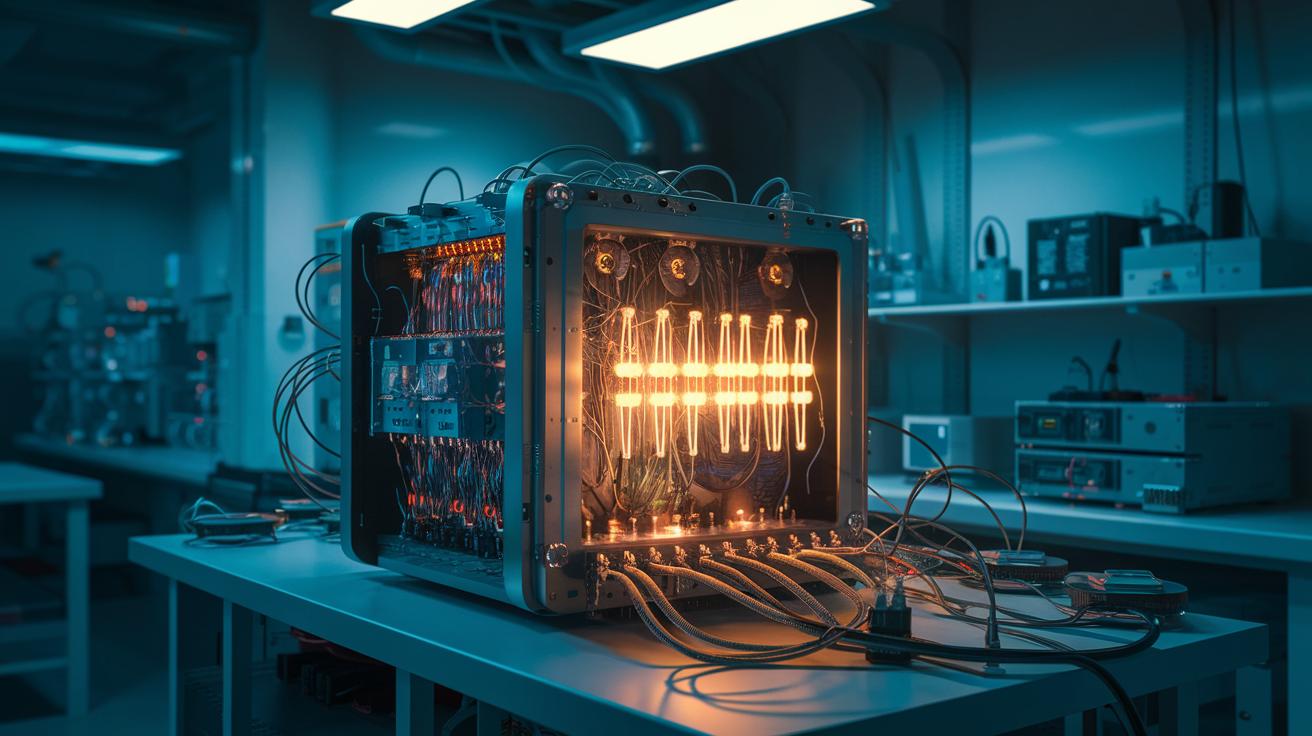
Qubits are the superstars of quantum computing, thanks to their ability to exist in a superposition. This means they can handle multiple calculations at once, like juggling many balls in the air. So, how does this parallel processing work? The answer is in the qubit's unique nature. While classical bits are limited to being either 0 or 1, qubits can be both at the same time. This capability allows quantum computers to solve complex problems much more efficiently than those using traditional methods.
In which fields do qubits really shine? Cryptography and optimization. Qubits can revolutionize these areas by handling tasks that are too demanding for classical computers. For instance, in cryptography, qubits can potentially break encryption codes that are currently unbreakable. In optimization, they can sift through countless possibilities to find the best solution, like finding the shortest route in a network of roads. This makes them invaluable in industries that require high-level data processing and security.
How do qubits differ from classical bits? Let’s break it down. Classical bits are like tiny soldiers, marching in a straight line either as 0 or 1. They process tasks in a predictable, step-by-step manner. Qubits, however, are more like dancers, moving fluidly between states. They use quantum mechanics to process information in parallel, opening up new horizons in computing that classical bits can't. This fundamental difference makes qubits an exciting step forward in the realm of technology.
| Aspect       | Qubit                                               | Classical Bit          |
|--------------|-----------------------------------------------------|------------------------|
| Representation | Superposition of 0 and 1                          | Either 0 or 1          |
| Processing     | Parallel, handling multiple calculations at once | Sequential, one at a time |
| Applications   | Cryptography, optimization, complex computations | Basic computation tasks |
Physical and Logical Qubits
Physical qubits are the tangible building blocks of quantum computers, made from diverse materials. These materials include superconductors, ions, and photons, each offering different advantages and challenges. Superconducting qubits, for instance, are crafted from metals like aluminum and niobium. They are popular in the industry because they can be manipulated with microwaves. Trapped-ion qubits, on the other hand, use ions held in place by electromagnetic fields. These methods illustrate the various ways physical qubits are realized, each contributing differently to the quantum computing landscape.
- Error reduction
- Enhanced reliability
- Essential for scalability
Logical qubits are the unsung heroes that bring stability to the noisy world of quantum computing. They are constructed from many physical qubits and are crucial for error correction. This structure allows for a more reliable quantum system by correcting the errors that naturally occur in physical qubits. The significance of logical qubits lies in their ability to make quantum computers scalable and practical for real-world applications. Without them, the dream of powerful quantum computers would remain just that—a dream.
Measurement and Behavior of Qubits
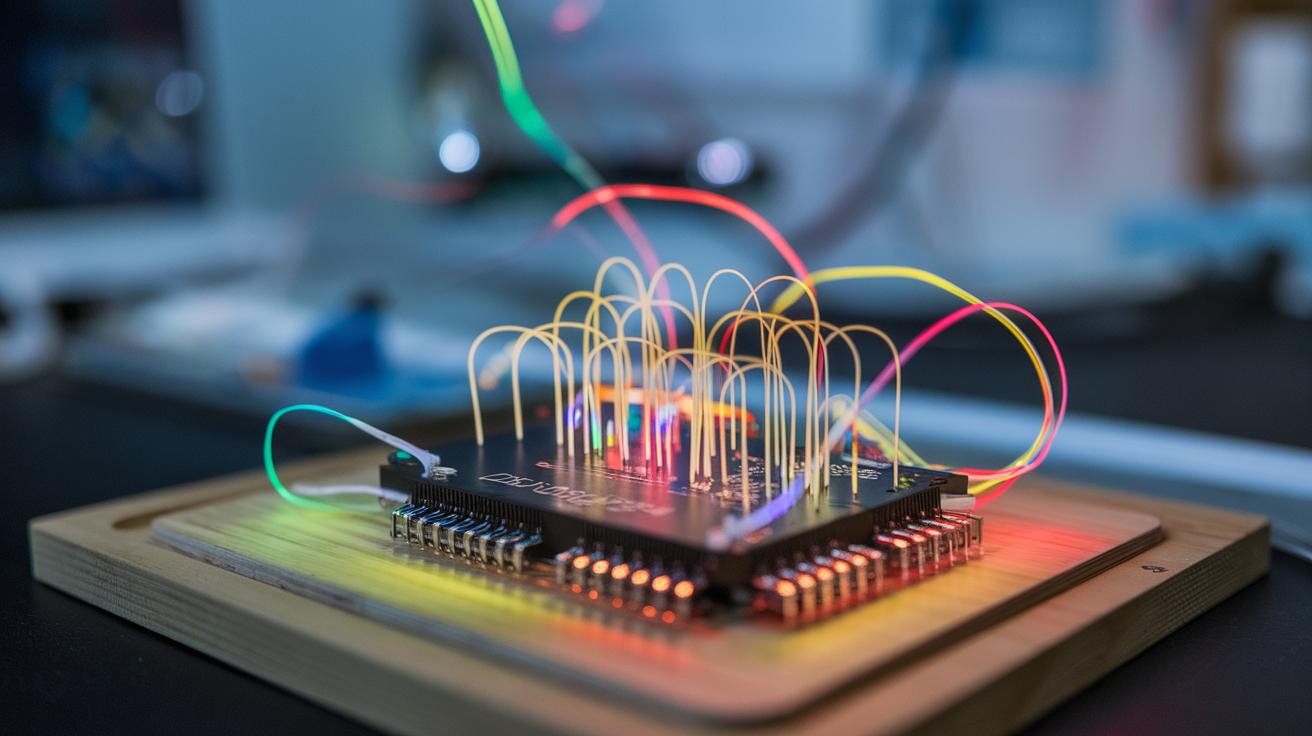
Have you ever wondered what happens when you measure a qubit? When a qubit is in superposition, it's like being in two places at once. But when you measure it, the qubit collapses to just one of its basis states, either |0⟩ or |1⟩. This collapse is a bit of a mystery—it's a key part of quantum mechanics that's not fully understood. But it's essential. You see, while a qubit can hold an infinite amount of potential information, measuring it gives you just a single bit of information. It's like peeking into a world of infinite possibilities and coming back with only a yes or no.
Now, let's talk about the measurement process itself. When you measure a qubit, you're forcing it to choose a state. Imagine a spinning coin that lands heads or tails only when you catch it. The act of measurement is like catching the coin. Before you do, the qubit can be in a mix of states, but once you look, it has to settle down. The probabilities of landing on |0⟩ or |1⟩ depend on the qubit's state before you measured it. So, measuring a qubit is tricky. You get the immediate answer, but lose all the other info it held.
- Photon polarization
- Nuclear spin states
- Electron states in atoms
- Quantum entanglement measurement
These examples show different scenarios of measuring a qubit. Photon polarization uses the direction of light waves to represent qubit states. Nuclear spin states rely on the angular momentum of atomic nuclei. Electron states in atoms involve the energy levels of electrons. Quantum entanglement measurement checks how qubits are intertwined. Each method gives unique insights into the qubit's behavior, but all boil down to the same result: knowing one state while losing the rest.
Challenges and Advances in Qubit Technology
Why are qubits noisy and prone to errors? It's mainly because of decoherence. Decoherence is when qubits lose their quantum state due to things like heat or movement. Imagine trying to listen to a whisper in a room full of shouting people. That's sort of what happens to qubits—they get overwhelmed by the environment around them and start to lose their special quantum properties. This makes it tricky to keep them stable long enough to do useful computations.
But how are scientists tackling these challenges? They've been diving deep into material science and error correction techniques. Companies like Google and IBM are at the forefront, using superconducting qubits to improve reliability. Superconducting qubits are cooled to extremely low temperatures to help maintain their quantum state. This is kind of like putting the whisper in a soundproof room, so it doesn't get drowned out. Plus, error correction methods are being developed to catch and fix mistakes before they mess up the calculations.
- Superconducting qubits
- Trapped-ion technology
- Neutral-atom scalability
- Error correction techniques
- Material innovations
So, what's happening in ongoing research? Scientists are exploring various avenues to make qubits more stable and scalable. Superconducting qubits are just one path. Trapped-ion technology is another approach where ions are held in place by electromagnetic fields. Then there's neutral-atom scalability, which uses light instead of electricity to control atoms. Error correction techniques are being refined, ensuring calculations are more accurate. Plus, new materials are being tested to see if they offer better stability and less noise. All these efforts are slowly but surely moving quantum computing forward.
Final Words
The magic of qubits, or quantum bits, lies in their unique ability to exist in superposition. They aren't like the bits we know and love from classical computers. Instead, qubits can handle complex computations, making quantum computing a fascinating field.
In comparing qubits with classical bits, we see how they bring fresh possibilities to tasks like cryptography and optimization. The advancements we’ve seen, despite the noise and decoherence challenges, are promising.
Understanding what is a qubit and its potential opens a door to a whole new world of computing. It's a thrilling time for technology, don’t you think?
FAQ
What is a qubit in quantum computing?
A qubit, or quantum bit, is the basic unit of information in quantum computing. It can exist in multiple states at once, thanks to the concept of superposition, allowing it to represent both 0 and 1 simultaneously.
What is a qubit physically?
Physically, a qubit can be a particle like an electron or a photon. It’s controlled using quantum properties, such as spin or polarization, to process quantum information.
What is a qubit used for?
Qubits are used in quantum computers to perform complex calculations more efficiently than classical computers. They have applications in areas like cryptography, optimization, and simulating molecular processes.
Qubit vs bit
A qubit differs from a classical bit because it can exist in a superposition, meaning it can be both 0 and 1 at the same time. In contrast, a classical bit can only be either 0 or 1.
What are qubits made of?
Qubits are made from various materials, including superconducting circuits, trapped ions, or quantum dots. Each type offers unique ways to manipulate and control quantum states.
What is a qubit crypto?
Qubit crypto refers to cryptographic methods that use quantum computations. Qubits enhance security protocols, potentially breaking traditional encryption if fully realized.
What is a qubit and how does it work?
A qubit works by existing in multiple states due to superposition. When a qubit is measured, it collapses to a definite state. This allows it to process vast amounts of data quickly.
1 qubit is equal to how many bits?
One qubit is not directly comparable to a specific number of bits. Its superposition allows it to represent multiple possibilities, providing a richer information structure than a single bit.
What is a qubit in simple terms?
In simple terms, a qubit is like a coin spinning through the air, holding the potential of both heads and tails until it lands. This flexibility enables powerful computations.
How many bits is 1 qubit?
A single qubit doesn't equate to a specific number of bits but can simulate numerous scenarios simultaneously, potentially handling data equivalent to more than one classical bit.
How powerful is 100 qubits?
In theory, 100 qubits can perform computations that are currently infeasible for classical computers, solving complex problems in minutes that might take classical computers years.
What are the 4 states of qubits?
Qubits don’t have fixed states like classical bits. Instead, they exist in states that are combinations of 0 and 1. Measurement collapses them to a specific state, revealing only one outcome.
