

Have you ever wondered how street art became such a major player in the world of art? It's fascinating how spray cans and concrete walls have created a cultural revolution. In this article, we'll uncover the eight most successful street artists captivating the world today. We're talking about artists whose works aren't just splashes of color on urban landscapes but cultural landmarks that speak volumes. From the shadowy mystique of Banksy to the bold colors of Jean-Michel Basquiat, these artists have made us stop, look, and think. Let's explore how they've painted their way into our collective consciousness.
Banksy: The Enigmatic Icon of Street Art
Banksy is a name that echoes through the alleys and streets of cities around the globe. This England-based street artist has made waves with his satirical and political art, remaining anonymous while capturing the world’s attention. He started as a graffiti artist in the 1990s, gaining fame for his unique blend of dark humor and thought-provoking imagery. But who is Banksy? That's a question that remains unanswered, adding to his mystique and appeal. His rise to fame was rapid, with pieces like "Girl with Balloon" and "The Flower Thrower" cementing his status as one of the most famous street artists today.
His work is easily recognizable, often created with spray cans and stencils. These tools allow him to quickly execute his art, sometimes in places where time is of the essence. Banksy’s art often carries powerful messages on social and political issues, making viewers pause and think. "Girl with Balloon" is one of his best-known works, depicting a girl reaching for a heart-shaped balloon. It’s a simple image, yet loaded with emotion and open to interpretation. "The Flower Thrower," created in Jerusalem, is another iconic piece showing a masked figure poised to throw a bouquet of flowers like a Molotov cocktail. This striking image calls for peace, challenging the viewer’s perspective on conflict and protest.
Banksy's influence goes beyond street art, affecting broader art culture and sparking discussions on societal issues. His works fetch millions at auctions, and his self-destructing "Girl with Balloon" piece at an auction in 2018 made headlines worldwide. This act was a statement on the commercialization of art, demonstrating his ability to turn the art world on its head. Through his art, Banksy gives a voice to the voiceless, critiquing everything from consumerism to politics. His cultural impact is profound, as he continues to inspire both established and emerging artists to use their art for social change.
| Artwork Title | Year | Location |
|---|---|---|
| Girl with Balloon | 2002 | London |
| The Flower Thrower | 2003 | Jerusalem |
| The Little Girl with the Balloon (self-destructed version) | 2018 | London Auction |
Shepard Fairey: From "Obey Giant" to Political Art
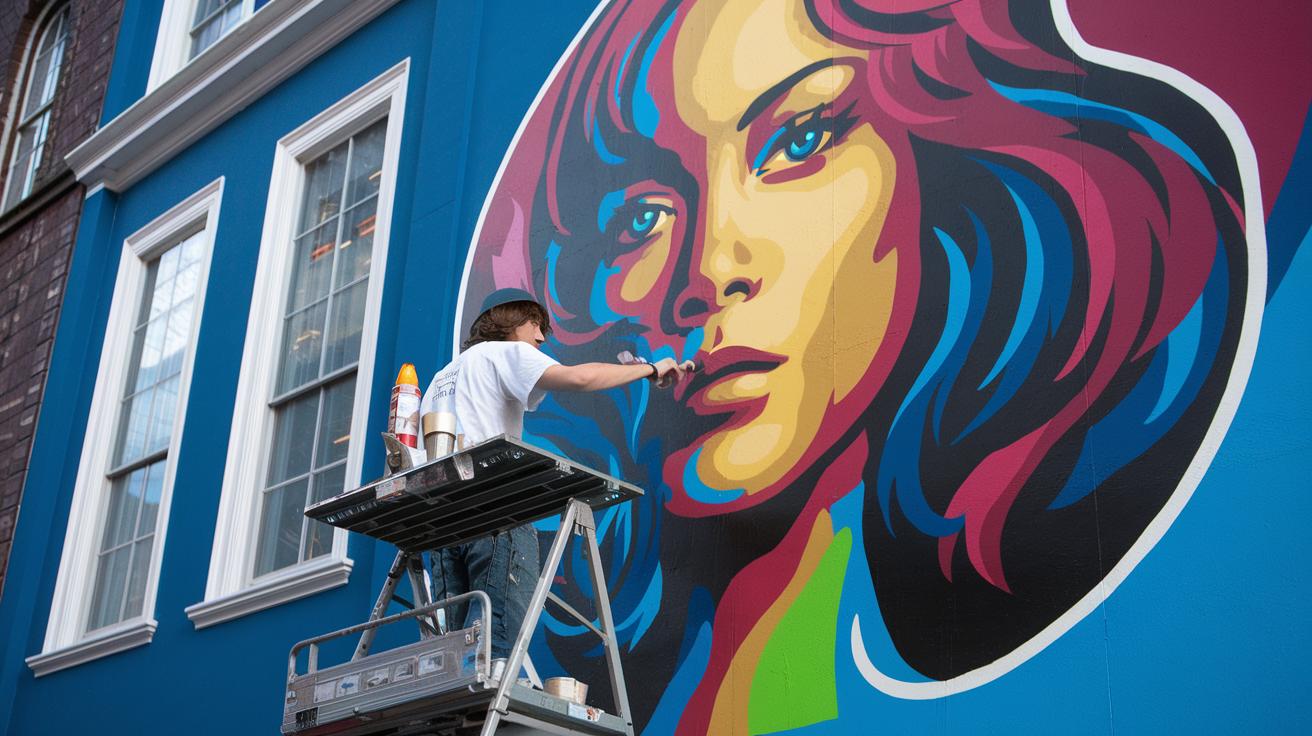
Shepard Fairey's journey into the world of political street art began with a simple sticker featuring Andre the Giant. But how did a sticker turn into a global campaign? It was the launch of the "Obey Giant" campaign, which played with the concepts of propaganda and public space. This early work established Fairey's reputation as a powerful voice in street art. His style, a fusion of graffiti, pop art, and commercial design, often tackles pressing social issues. Fairey reached new heights with his "Hope" poster during Barack Obama's 2008 presidential campaign. The poster became a symbol of political change and optimism, showing how art can influence public opinion. Another significant work is his mural "Marianne" in Paris, created as a tribute to resilience after the 2015 terror attacks. This piece reflects his ability to harness art for healing and unity.
- "Obey Giant" – Commentary on propaganda.
- "Hope" – Symbol of political change.
- "Marianne" – Tribute to resilience after attacks.
Fairey's influence on contemporary street art is profound. His works are not just art; they're calls to action, challenging viewers to think critically about the world around them. Have you ever noticed how some art just sticks with you? Fairey’s projects often linger in the mind, urging change and reflection. His unique blend of visual styles has inspired countless artists to explore political themes in their work. By moving beyond traditional graffiti, Fairey has shown that street art can be a powerful tool for social commentary, leaving an indelible mark on both art and politics.
Jean-Michel Basquiat: The Raw Power of Expression
Jean-Michel Basquiat's journey from graffiti artist to celebrated painter is nothing short of remarkable. He began his career tagging buildings in New York City under the name "SAMO," creating street art that was both cryptic and profound. But how did Basquiat transition from the streets to the art galleries? Precision: He drew attention with his unique style and striking social commentary, which quickly caught the eye of the art world. His raw energy and distinctive approach resonated with critics and collectors alike, launching him into the spotlight. Basquiat's work was more than just art; it was a voice for the marginalized, reflecting the complexities of race and class with a raw, emotive power.
-
Influence of NYC's vibrant street culture.
-
Commentary on social issues like race and class.
Basquiat's legacy is one that continues to reverberate through the art world today. His ability to merge urban art with traditional fine art challenged perceptions and paved the way for future generations of street artists. Have you ever wondered why Basquiat's work still feels relevant? It's because his art speaks universal truths that transcend time, encouraging others to address social issues through creativity. His influence is evident in the works of contemporary artists who draw inspiration from his fearless exploration of identity and society. In truth, Basquiat's impact is enduring, ensuring his place as a pivotal figure in both street and urban art history.
Keith Haring: Colorful Figures and Activism
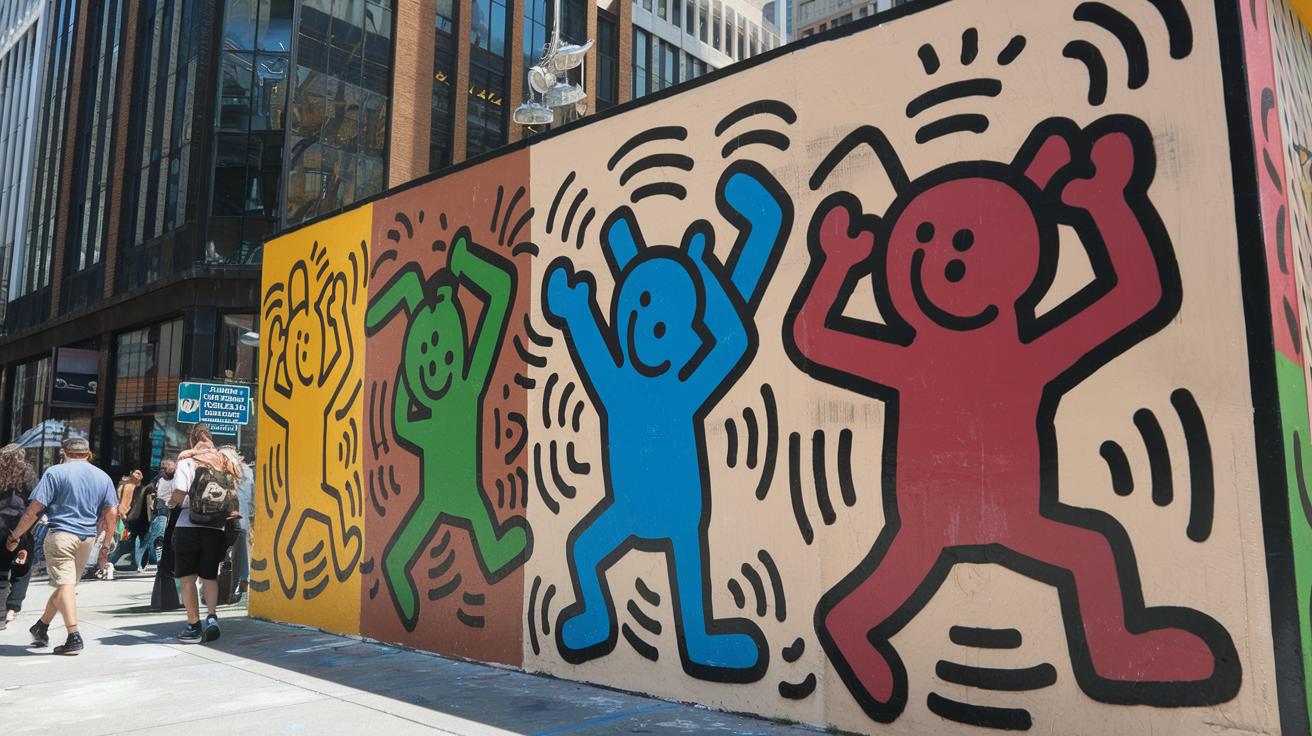
Keith Haring's art is instantly recognizable by its bright, cartoon-like figures that seem to dance across walls and canvases. But what makes his style so unique? Precision: It's the way he combined simple lines with vibrant colors to create dynamic, energetic scenes. Haring's themes often revolved around love, unity, and the human experience, using these joyful figures to explore deeper social issues. His work is like a visual symphony, where each character contributes to a larger narrative about society and the world.
Specific works by Haring tackled pressing social issues head-on. His mural "We the Youth," created with local students in Philadelphia, is a celebration of community and empowerment. Have you ever noticed how art can speak louder than words? Haring certainly believed it could. His pieces often addressed the AIDS crisis, apartheid, and other human rights issues, bringing them to the forefront of public consciousness. Through his art, Haring became not just a creator, but a social activist harnessing the power of imagery to provoke thought and inspire change.
Haring's influence on street art culture is profound and enduring. He showed that art could be both accessible and impactful, bridging the gap between public art and social activism. His work continues to inspire artists around the world to use their creativity as a platform for change. Haring's legacy is like a vibrant thread woven into the fabric of street art, reminding us that art isn't just about aesthetics—it's about making a difference.
JR: Bringing Human Connection to the Streets
JR transforms cityscapes into public galleries with his large-scale black-and-white photographic installations. Have you seen those massive faces plastered on buildings? That's likely JR's handiwork. His style is unique, using photography to create art that speaks directly to the people. One of his notable projects, "Inside Out," invites public participation, turning individuals into contributors to the art. It's like a giant photographic mosaic where everyone gets to add their piece. And then there's "Women Are Heroes," a project highlighting the strength and impact of women worldwide. Through these works, JR uses the streets as his canvas, making art that's accessible to everyone.
-
"Inside Out" – Public participation in art.
-
"Women Are Heroes" – Highlighting women's contributions.
The social impact of JR's work is profound. By featuring the faces and stories of real people, especially those from marginalized communities, he fosters a sense of identity and connection. His art sparks conversations and brings attention to social issues that might otherwise be overlooked. Have you ever thought about how art can change perceptions? JR does this by giving a platform to those whose voices are often unheard, making art a tool for social change. Through his projects, JR not only beautifies the urban landscape but also enriches the communities he touches, proving that art can be both powerful and transformative.
Invader: The Digital Mosaic of Street Art
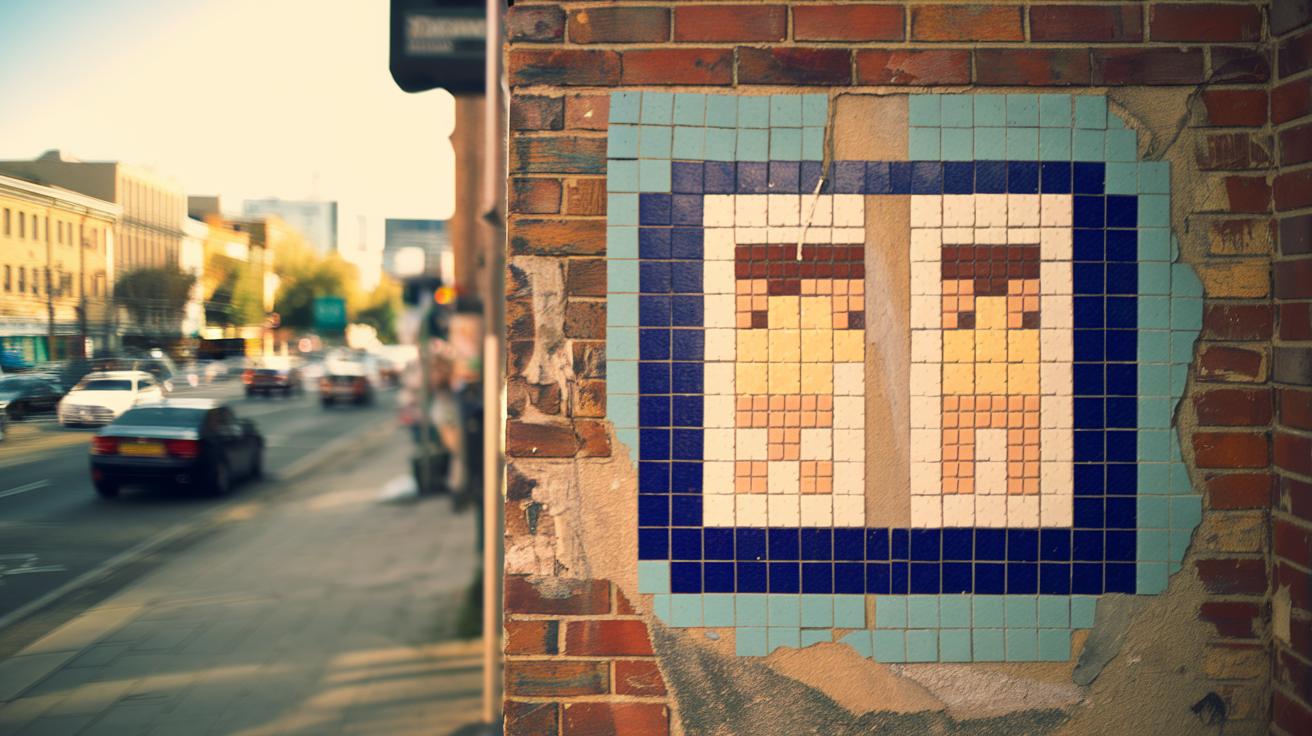
Have you ever spotted a tiny, colorful mosaic on a city wall and wondered about its origin? That's likely the work of Invader, a French street artist whose creations are inspired by 8-bit video games like Space Invaders. This unique style bridges the gap between street art and digital culture, transforming plain walls into playful canvases. Invader uses small, square tiles to craft these pixelated images, a technique that mimics the look of old-school video game graphics. Why tiles? Precision: They allow for a durable, weather-resistant medium that can withstand the elements while maintaining their vibrant colors. With over 3,700 pieces installed in cities around the world, Invader’s art is like a global scavenger hunt, inviting people to explore urban spaces with fresh eyes.
Invader's work isn’t just about aesthetics; it’s a cultural dialogue that challenges the boundaries of traditional street art. How does Invader influence the intersection of street art and digital culture? His mosaics act as a bridge, bringing the nostalgia of early video games into modern urban environments. By doing so, he engages both art lovers and tech enthusiasts, creating a shared appreciation for the blend of old and new. Invader’s pieces often include QR codes, offering a digital layer to his analog art. This fusion not only enriches the visual experience but also invites interaction, making viewers part of a larger, connected world. Through his innovative approach, Invader has redefined what street art can be, proving that it’s not just about paint on walls—it’s about connecting people through shared memories and digital playfulness.
Os Gemeos: Brazilian Culture on a Global Canvas
Os Gemeos, the talented duo of twin brothers from Brazil, have truly painted a vibrant tapestry on the global street art scene. Their art is unmistakable, with its rich colors and dreamlike quality that draws from Brazilian culture and folklore. Have you ever seen their murals? They're like stepping into a surreal world where whimsical characters dance across walls, telling stories of their heritage and imagination. This unique blend of cultural themes and artistic flair has not only captivated audiences but also played a significant role in the street art movement. The brothers' work is a celebration of Brazil, showcasing its spirit and diversity in ways that resonate worldwide.
-
"Giants" in Boston, USA.
-
"Mural Festival" in Montreal, Canada.
Os Gemeos have been instrumental in popularizing street art, not just in Brazil but across continents. Their participation in international street art festivals and projects has brought their colorful narratives to new audiences, inspiring a global appreciation for their style. By painting massive murals in cities around the world, they've created connections through art, bridging cultural gaps and fostering a shared love for creativity. Their impact is profound, as they continue to influence both the aesthetics and the reach of street art on a global scale. Through their vibrant works, Os Gemeos have become ambassadors of Brazilian culture, leaving an indelible mark on the urban landscape.
KAWS: Redefining Pop Culture through Street Art

How did KAWS transition from graffiti to fine art? Precision: He started by tagging freight trains in the 1990s, which led to a distinctive style that caught the eye of the art world. As KAWS, whose real name is Brian Donnelly, honed his craft, he began to incorporate his graffiti skills into fine art, creating pieces that blurred the lines between street art and gallery-worthy works. His early days of painting over billboards and bus stop advertisements with his unique characters set the stage for his evolution into a respected contemporary artist. This seamless shift from the streets to high-end galleries allowed KAWS to redefine what art can be, bridging the gap between urban and fine art.
KAWS is famed for collaborations and exhibitions that showcase his unique blend of street art and pop culture. His partnerships with brands like Nike and Uniqlo have brought his art to a global audience, proving that street art can thrive in both commercial and artistic spaces. Exhibitions in prestigious venues such as the Museum of Modern Art in New York have further cemented his reputation as a leading contemporary artist. Have you seen his sculptures of iconic characters like Mickey Mouse reimagined with his signature "X" eyes? These works are a testament to his ability to transform familiar icons into art that challenges viewers' perceptions.
KAWS' impact on art and commercial culture is profound. His ability to merge street art with consumer products has shown that artistic expression can exist beyond traditional boundaries. By creating pieces that resonate with both art enthusiasts and the general public, KAWS has expanded the reach of street art, making it more accessible and influential. His work encourages a dialogue between the worlds of art and commerce, proving that creativity doesn’t have to be confined to one realm. Through his innovative approach, KAWS continues to inspire a new generation of artists to explore the intersections of art, culture, and commerce.
Final Words
Street art is more than spray cans and walls. It's about expression and impact. Artists like Banksy changed the game with clever, satirical works. Think of "Girl with Balloon" or "The Flower Thrower"—they're not just images; they're powerful messages.
Shepard Fairey and Jean-Michel Basquiat took it further, weaving in political and social themes. Meanwhile, Keith Haring and JR made street art about human connection and activism. They showed art could speak loudly without saying a word.
And then there's the tech-savvy Invader and the vibrant Os Gemeos, each adding their own flair to the mix. Let's not forget KAWS, bringing pop culture into the spotlight and redefining it.
All these artists, each unique, have cemented their place among the 8 most successful street artists. They continue to inspire and reshape how the world views art on the streets. It's a colorful, dynamic blend that keeps on evolving with every stroke and spray.
FAQ
Who is the most famous street artist?
Banksy is often considered the most famous street artist due to his distinctive and thought-provoking works, like "Girl with Balloon." His pieces blend satire and social commentary, capturing global attention and sparking conversations.
Who is the most valuable street artist?
Banksy holds the title as the most valuable street artist, with his pieces fetching millions at auctions. His art's mix of social critique and anonymity adds to its demand and mystique in the art world.
Who is the father of street art?
Jean-Michel Basquiat is frequently credited as a pioneering figure in street art, thanks to his dynamic and expressive pieces. He began in New York City and his art often tackles themes of race and class.
Who is the most famous unknown street artist?
Banksy is the most iconic unknown street artist. Despite his fame, his real identity remains a mystery, amplifying the intrigue and appeal around his politically charged street art.
Are there famous graffiti artists from NYC?
Yes, there are several notable graffiti artists from NYC. Jean-Michel Basquiat and Keith Haring started their careers in New York's vibrant street art scene, using it as a canvas for their expressive and impactful works.
What is Keith Haring known for in street art?
Keith Haring is known for his colorful, cartoon-like figures and social activism. His art often addressed issues like AIDS awareness and apartheid, leaving a significant mark on both street art and pop culture.
What themes does Shepard Fairey explore in his art?
Shepard Fairey is renowned for exploring themes of propaganda and social issues. His famous works like "Obey Giant" and the "Hope" poster serve as political statements, blending graffiti with pop art and commercial elements.
How does JR contribute to street art?
JR is known for large-scale black-and-white photographic installations. His projects like "Inside Out" promote human connection and bring awareness to marginalized communities, adding a unique social dimension to street art.
What style is Invader known for in street art?
Invader is famous for his mosaic tile artworks inspired by 8-bit video games. His unique style bridges street art with digital culture, having installed over 3,700 pieces in cities around the world.
How have Os Gemeos contributed to global street art?
Os Gemeos, Brazilian twins, have enriched global street art with their colorful, surreal murals that reflect Brazilian culture and folklore. Their works are displayed internationally, spreading their vibrant artistic style worldwide.
