

Who is Banksy, and why does an artist hiding in the shadows captivate so many of us? Since the early 2000s, endless theories swirl about Banksy's real identity—could it be Robert Del Naja, Robin Gunningham, or perhaps a group working together? With no clear answers, one thing is certain: the mystery only adds to the allure. In this post, we'll explore the colorful tapestry of speculation around Banksy's identity, his cryptic art style, and the impact he's had on street art and culture. So, let’s wander into this world of intrigue together. Curious? Let’s see what we can find.
The Mystery of Banksy's Identity
Who is Banksy? That's the question that has puzzled both art lovers and everyday folks for years. Banksy's real identity is a secret that has fueled endless speculation. People have been guessing since the early 2000s, but the truth remains hidden. Theories swirl around, each one adding to the mystery, but none have been confirmed.
One popular theory is that Banksy might be Robin Gunningham. This theory gained traction because of similarities in their movements and connections to Bristol. Another intriguing possibility is that Banksy is Robert Del Naja from the band Massive Attack. This idea comes from the fact that Banksy's murals often appear in places where the band has been touring. Some even believe that Banksy could be a collective of artists, working together to create the famous street art. Each theory makes sense in its own way, but we just don’t have enough proof to say for sure.
- Robin Gunningham: Linked by location and timing.
- Robert Del Naja: Ties to Massive Attack's tour locations.
- A Collective: Explains the widespread art presence.
- Neil Buchanan: Speculated in 2020, though denied.
- Jamie Hewlett: Suggested due to company ownership links.
Banksy’s hidden identity is not just a personal quirk—it's part of what keeps people talking about his work. The secrecy allows the art to speak for itself, unfiltered by personal fame. It adds an air of mystery and keeps the focus on the messages in his art rather than on the artist himself.
Banksy's Artistic Style and Themes

Banksy is renowned for his clever use of stenciling, a technique that allows for quick application and precision—ideal for street art's covert nature. Precision: Banksy's art is characterized by the use of stencils, which help him create sharp, detailed images quickly. This method suits his need to work swiftly, often under the cover of darkness. His approach to art mixes humor with striking imagery, often making bold statements on walls and public spaces. His work draws the eye with its visual simplicity, yet packs a punch with its underlying message.
| Theme | Iconic Work |
|---|---|
| Social Critique | Kids with Guns |
| Political Commentary | Rage, Flower Thrower |
| Capitalism | Shop Until You Drop |
Banksy’s art often tackles heavy societal and political issues, using his platform to voice dissent against systems of power and inequality. His works address themes like capitalism’s impact, war, and consumer culture. Images like “Rage, Flower Thrower” flip the script on violence, suggesting peace over aggression with a bouquet in place of a grenade. His pieces challenge viewers to reflect on the world we live in, sparking conversations that reach beyond the gallery walls. Banksy’s messages are not just visual but also rhetorical, urging us to question and rethink our beliefs.
The Impact of Banksy on Street Art and Culture
Banksy has truly reshaped how the art community views street art. His influence has turned what was once considered mere vandalism into a celebrated form of expression. Street art has gained newfound respect, thanks in large part to Banksy's ability to blend social commentary with striking visuals. By challenging traditional norms, his work has paved the way for street art to be recognized within the broader art world. The street art mystery surrounding his identity adds an extra layer of intrigue, drawing more attention and curiosity to the genre. Today, his influence can be seen in galleries and public spaces worldwide, as street art continues to evolve and inspire.
- Shepard Fairey: Known for the "Hope" poster of Obama.
- Invader: Famous for his pixelated mosaics.
- JR: Combines photography with street art.
- Dolk: A Norwegian artist inspired by Banksy's style.
Banksy's role in cultural conversations is undeniable. His art isn't just about aesthetics; it's a voice for societal issues. Through his pieces, Banksy has sparked debates on topics like consumerism, war, and freedom. His ability to provoke thought and dialogue has secured his place not just in the art world, but also in broader cultural discussions. By using art as a tool for protest, Banksy has highlighted how creativity can drive change and awareness, cementing his legacy as a pivotal figure in contemporary culture.
Notable Works and Public Reactions

Banksy's art is a conversation starter, often creating a stir in the public and media. Some of his most iconic artworks, like "Girl With Balloon," have captured the hearts of many. This piece famously shredded itself moments after being sold at a Sotheby's auction for over a million pounds. Another well-known work, "Mobile Lovers," was used to raise funds for a youth club, showing Banksy's knack for blending art with philanthropy. These pieces aren't just visually striking—they're loaded with meaning and often provoke strong reactions.
| Artwork | Public Reaction |
|---|---|
| Girl With Balloon | Shredded itself at auction, causing a media frenzy. |
| Mobile Lovers | Sold to support a local youth club, praised for benefiting the community. |
| The Flower Thrower | Widely regarded as a powerful symbol of peace over violence. |
The media plays a significant role in shaping how the public perceives Banksy. Coverage of his stunts, like the Sotheby’s shredding, often turns his art into headline news. This attention not only highlights the artwork but also amplifies its message, reaching audiences far beyond the art world. The media’s fascination with Banksy keeps the conversation around his work alive, ensuring that his pieces remain in the public eye.
Banksy’s art doesn’t just hang on walls; it sparks dialogue and engages people in ongoing debates. His works often challenge societal norms, prompting discussions about topics like consumerism and war. The enigmatic nature of Banksy himself adds another layer of intrigue, as people are drawn to the mystery surrounding both the artist and his creations. Through his art, Banksy continues to captivate and provoke, ensuring his place in cultural conversations worldwide.
Banksy and the Art Market
How much is Banksy's art worth? Well, it's worth a lot. His pieces command sky-high prices, and the Sotheby's auction is a prime example. The famous "Girl With Balloon," which shredded itself right after selling, fetched over a million pounds. This incident didn't just make headlines; it highlighted how Banksy defies art market norms while still captivating collectors. His works are a paradox—criticizing commercialization yet thriving in it. Collectors are drawn to this tension, as it adds layers of intrigue and value to his art.
- The self-destructing "Girl With Balloon" made history with its in-auction shredding.
- Banksy's "Gross Domestic Product" shop required buyers to explain "Why does art matter?" before purchase.
- He once sold art disguised as a street vendor in Central Park for $60 a piece, far below market price.
Banksy's success in the art market creates a fascinating contradiction. His commercial triumphs challenge his anti-establishment ethos, sparking debates about authenticity and intent. Does selling high-priced art dilute his message? Some argue it might, but others see it as a clever critique of the market itself. By thriving within the system he critiques, Banksy keeps everyone guessing. His ability to navigate these contradictions keeps his art, and the conversations around it, ever-relevant.
The Ongoing Legacy of Banksy
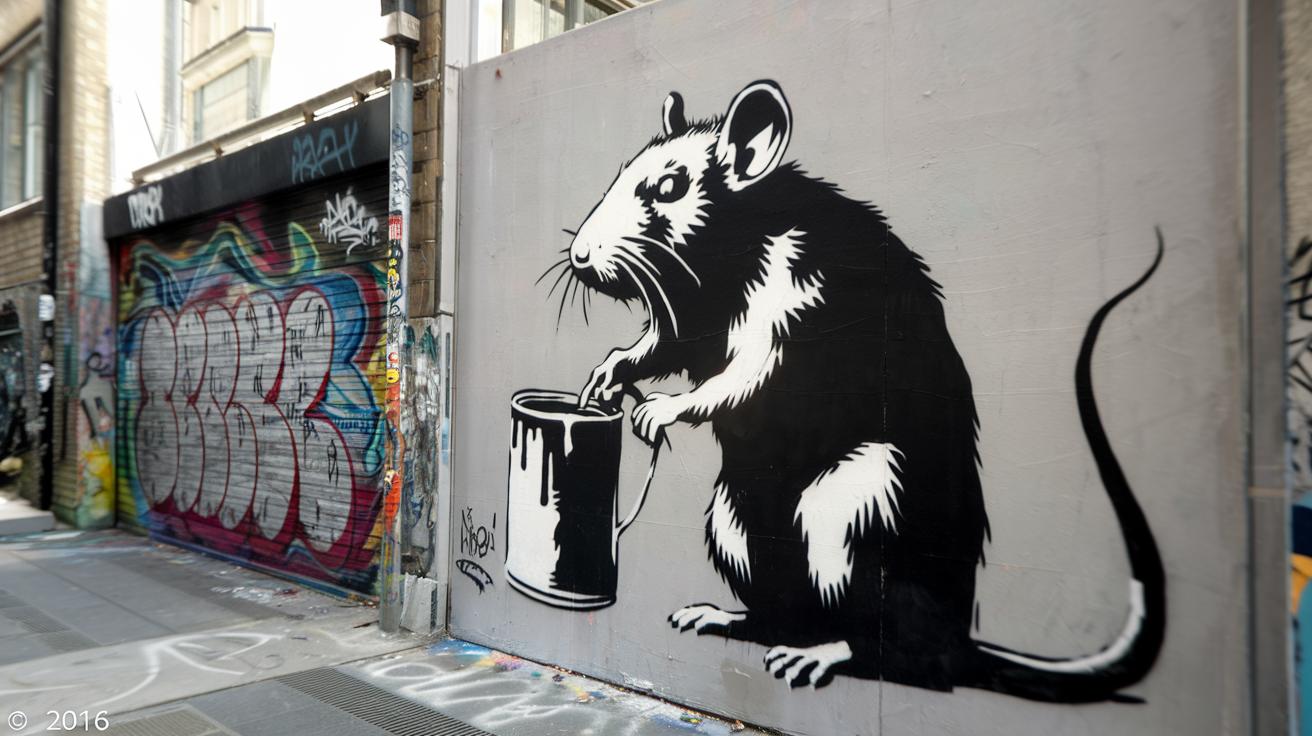
Banksy's legacy in modern art is undeniable. His work has shifted how we view graffiti and street art, elevating them from mere vandalism to respected forms of expression. By using art as protest, Banksy tackles societal issues like consumerism, war, and freedom in ways that resonate with people worldwide. His pieces don't just decorate walls—they provoke thought and inspire change. This ability to turn art into a tool for social commentary is a significant part of his legacy. Have you ever noticed how a single Banksy piece can spark conversations across the globe? That's the impact of his unique approach to art.
Looking ahead, Banksy’s influence will likely ripple through future generations of artists and cultural movements. New artists are already drawing from his playbook, using their art to voice dissent and challenge norms. His work encourages others to see art as a powerful medium for activism and dialogue. As street art continues to gain recognition, Banksy's contributions serve as a blueprint for blending creativity with social consciousness. His legacy will not only inspire artists but also shape cultural conversations for years to come, ensuring that art remains a vibrant force for change.
Final Words
From questioning who is Banksy to examining his hidden identity, this mysterious artist continues to intrigue us. His anonymity isn't just a secret; it's part of the art itself. Through unique, provocative messages, Banksy's work invites us to see the world differently.
His stencil art style, coupled with rich themes of social and political commentary, captures attention and challenges perceptions. As we unravel his impact on street art and the broader art world, we see how he sparks dialogue and changes norms.
With Banksy's legacy still unfolding, one thing feels certain: his mark on art and culture will endure.
FAQ
What is Banksy's real name?
Banksy's real name is not confirmed. Many believe he could be Robin Gunningham, Robert Del Naja, or part of a group, but there's no definite proof.
Is Banksy still alive?
Yes, Banksy is still alive. Though his identity is anonymous, his art and new pieces continue to appear, indicating his ongoing activity.
How old is Banksy?
Banksy's exact age is unknown, but he is often believed to have been born in the early 1970s, making him in his late 40s or early 50s.
What does Banksy look like?
Nobody truly knows what Banksy looks like. Rare photos and limited public appearances have kept his appearance a mystery.
Who is Banksy, and why is he so famous?
Banksy is a renowned anonymous street artist known for his impactful stencils and social commentary. His mysterious identity and ability to address societal themes have made him globally famous.
What is Banksy's famous quote?
One of Banksy’s notable quotes is, "Art should comfort the disturbed and disturb the comfortable." This reflects his approach to social and political themes.
What are 5 facts about Banksy?
- Banksy is known for street art that makes social statements.
- His identity remains a mystery.
- Inspired artists globally.
- Uses stenciling for quick art creation.
- His works have sold for millions.
What is Banksy's net worth?
Banksy's net worth is estimated to be around $50 million, due largely to the high demand and value of his transformative art pieces.
How does Banksy's anonymity impact his art?
Banksy's anonymity adds intrigue, focusing attention on his art's message. It creates a mystique that enhances public engagement and conversation around his work.
