

Ever thought about how anyone could just waltz into a museum and swipe priceless art? It sounds like something straight out of a movie, right? But nope, these dramatic thefts really happened, and they're as thrilling as any blockbuster. Today, we're diving into some of history's biggest art heists. It’s a wild mix of cunning strategies, unsolved mysteries, and relentless investigations. So, grab your detective hat. You’re in for some jaw-dropping tales that blend real-life intrigues with a touch of the unexpected. Who knew the art world had such hidden dramas? Ready? Let’s go.
The Isabella Stewart Gardner Museum Heist: The Biggest Art Theft in History
On March 18, 1990, the Isabella Stewart Gardner Museum in Boston experienced what is now known as the largest art theft in history. Two men, dressed as police officers, managed to trick their way into the museum late at night. Once inside, they overpowered the guards and tied them up in the basement. The heist was swift and calculated, lasting just 81 minutes.
The thieves made off with 13 significant pieces of art valued at over $500 million today. Among the stolen works was Johannes Vermeer’s "The Concert," one of only 34 paintings by Vermeer known to exist. Rembrandt’s "Storm on the Sea of Galilee," his only known seascape, was also taken. These masterpieces are not just financially valuable but hold tremendous cultural significance, representing vital pieces of art history that are now lost to the public.
Despite extensive investigations, the stolen art has never been recovered. Over the years, the FBI has pursued countless leads, but the case remains unsolved. The original perpetrators are believed to be deceased, and the whereabouts of the artworks are unknown. Various theories have emerged, suggesting that the paintings might be hidden away in private collections or used as currency in black market dealings. The mystery continues to captivate the public and remains a poignant reminder of the fragility of our cultural heritage.
Famous Art Heists Throughout History

Art heists are like the stuff of movies—intriguing, daring, and sometimes almost unbelievable. These thefts can involve cunning plans and meticulous timing, leaving the public fascinated by the sheer audacity of their execution. While some of these famous art heists have been solved and the artwork returned, others remain shrouded in mystery, adding to their allure. Let's look at some of the most well-known art theft cases.
- The Mona Lisa (1911): Stolen by Vincenzo Peruggia from the Louvre, believing he was doing a patriotic act for Italy. The painting was recovered after 28 months.
- Montreal Museum of Fine Arts (1972): Thieves broke in through a skylight and stole 39 pieces of jewelry and 18 paintings, including works by Delacroix and Rembrandt. The stolen items remain missing.
- Swedish Speedboat Heist (2000): Armed thieves took hostages at Sweden’s National Museum, stealing a Rembrandt and two Renoir paintings valued at $45 million, then escaped by speedboat.
- The Scream (1994 and 2004): Edvard Munch's iconic painting was stolen twice. The first theft occurred during the Winter Olympics in Lillehammer, the second from the Munch Museum in Oslo. Both were eventually recovered.
- Kunsthal Museum in Rotterdam (2012): Thieves made off with seven paintings, including masterpieces by Picasso and Monet, valued at over $100 million. The artworks remain missing.
The public's fascination with art heists isn't just about the value of the stolen pieces. It's the mix of mystery, the challenge to authority, and the sheer thrill of such daring escapades that captivate imaginations. Whether recovered or still missing, these stories of audacious thefts continue to intrigue us, blending art with the allure of the unknown.
The Unsolved Mysteries of Art Thefts
Unsolved art heists are like puzzles missing their final pieces. They fascinate us with their mystery and the challenge they pose to investigators. Why are some art thefts so hard to solve? Well, high-value artworks are often hidden away, traded secretly, or even destroyed. This makes tracking them incredibly tough. The thieves are usually smart, using disguises, fake identities, and other tricks to cover their tracks. And once a piece is gone, it might not resurface for decades—if ever.
Here are some notable unsolved art heists that continue to baffle experts:
-
Caravaggio’s "Nativity with St. Francis and St. Lawrence" (1969): Stolen from a chapel in Palermo, Italy, this masterpiece is believed to have been taken by the Sicilian Mafia. Its whereabouts remain a mystery.
-
Montreal Museum of Fine Arts (1972): Thieves made off with 18 paintings and 39 pieces of jewelry. Despite extensive investigations, these valuable items have never been recovered.
-
Van Gogh’s "Poppy Flowers" (2010): Taken from the Mohamed Mahmoud Khalil Museum in Cairo, this painting's disappearance is still unsolved, with no solid leads on its location.
- The Isabella Stewart Gardner Museum Heist (1990): Known as the largest art theft in history, 13 pieces valued at $500 million remain missing. The case is still open, with tips coming in from all over the world.
Investigations into these unsolved art crimes are ongoing. Authorities often reopen cases, following new leads or using advanced technology to trace the artworks. Yet, the allure of uncovering these masterpieces keeps the world on edge, hoping that one day they might see the light again.
The Role of the FBI Art Crime Team
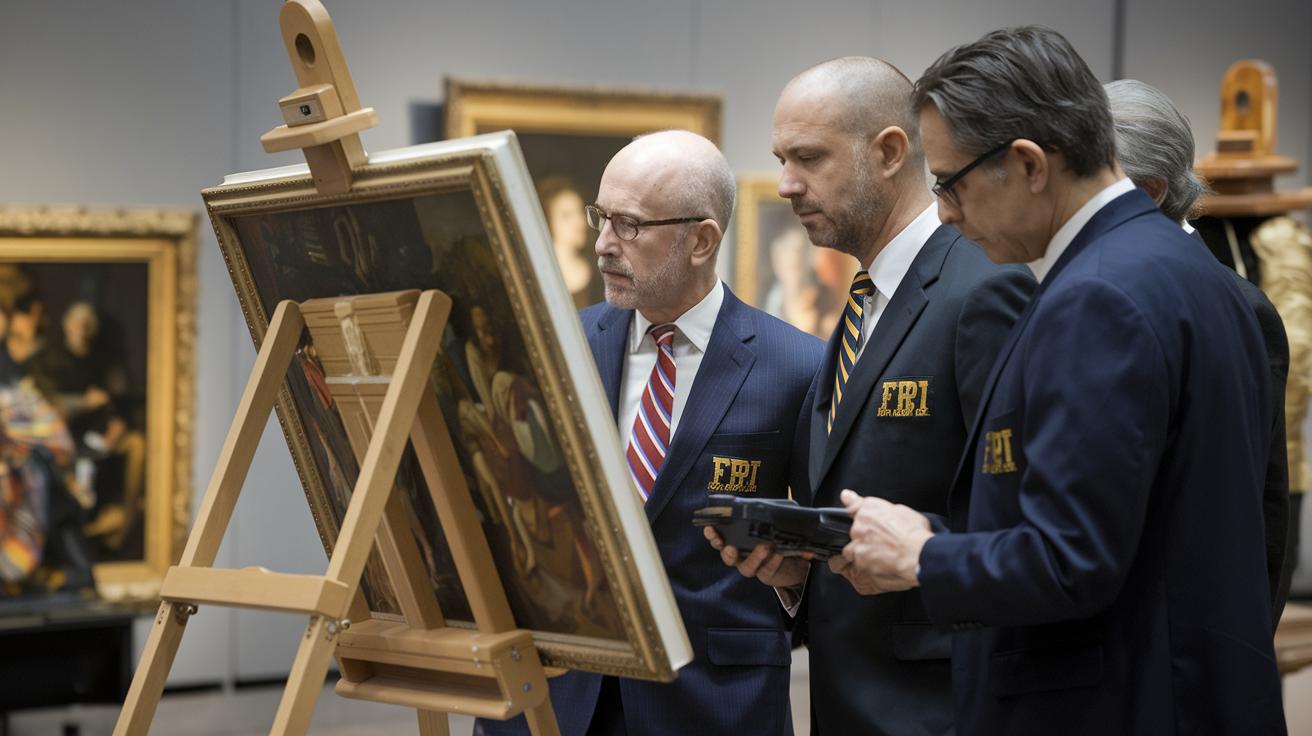
The FBI Art Crime Team sprang to life in 2004 to tackle the sneaky world of art theft and cultural property crime. Nestled in Washington, D.C., this team of experts is on a mission to track down and recover stolen art. And they've been pretty good at it! So far, they've found over 15,000 items worth more than $800 million. These folks know their stuff, working with international partners and using their deep knowledge of art history and investigations to crack cases.
Here are some of the team's impressive recoveries and successes:
- The return of a 500-year-old stolen copy of Columbus' letter on his discovery of the New World to Italy.
- Recovery of a Norman Rockwell painting stolen from a private collection in New Jersey.
- Reclaiming a rare Picasso sketch stolen from a Houston gallery.
- Retrieval of a looted Egyptian sarcophagus dating back to 600 BC.
- Finding and returning a painting by Henri Matisse stolen from a Venezuelan museum.
The FBI Art Crime Team isn't slowing down. They're always on the lookout, working with other countries and using cutting-edge techniques to bring lost masterpieces back home. Their tireless effort shows just how far they'll go to protect our shared cultural treasures.
Notorious Art Thieves and Their Methods
Art thieves aren't your everyday criminals. They're a cunning bunch, often pulling off heists that seem like they belong in a Hollywood thriller. These famous art thieves have left their mark on history with their daring escapades and clever tactics. Let's look at two of the most infamous art thieves and how they pulled off their notorious heists.
Vincenzo Peruggia
In 1911, Vincenzo Peruggia pulled off one of the most audacious art thefts by stealing the Mona Lisa from the Louvre. How did he do it? Peruggia, who was an employee at the museum, simply hid inside overnight. The next morning, dressed in a white smock like other workers, he casually removed the painting. His motivation? Peruggia claimed he wanted to return the Mona Lisa to Italy, believing it was stolen by Napoleon. But his plan to sell it back to an Italian gallery landed him in trouble when he was caught trying to do just that.
Vjeran Tomic
Known as "Spider-Man," Vjeran Tomic is another name that sends shivers down the spine of museum curators. In 2010, he scaled the Musée d'Art Moderne in Paris to steal five masterpieces, including works by Picasso and Matisse. How? Tomic climbed the museum's walls, broke a window, and disarmed the alarm system with astonishing agility. His heist wasn't just about the thrill; it was meticulously planned, and he used his athletic prowess to execute it flawlessly. Yet, his success was short-lived, as he was eventually caught and sentenced.
Art theft isn't just a game of cat and mouse. These criminals often face severe legal consequences. Long prison sentences are common, reflecting the high cultural and monetary value of stolen art. Countries take art theft seriously, considering it a major crime. After all, these heists don't just rob museums; they steal a piece of history, a cultural treasure that belongs to everyone.
Final Words
Intriguing tales of art heists like the Isabella Stewart Gardner Museum heist capture our imagination. In 1990, 13 priceless pieces vanished, leaving detectives scratching their heads even today. The thrill persists as we ponder unsolved cases and notorious heists, such as the Mona Lisa's daring theft.
FBI Art Crime Team steps into the fray, recovering treasures and seeking justice. This team's efforts fuel hope for tracking down the biggest art heists in history. As you dive into the stories, feel inspired by the creativity and challenge of solving these art mysteries. Who knows what treasures might be uncovered next?
FAQ
What is the largest art heist in history?
The largest art heist in history occurred at the Isabella Stewart Gardner Museum. On March 18, 1990, two thieves stole 13 artworks valued at over $500 million. They disguised as police officers to gain entry.
What is the most famous heist in history?
The most famous heist in history is arguably the Isabella Stewart Gardner Museum heist. It involved monumental artworks from Vermeer and Rembrandt and has remained unsolved, capturing worldwide attention.
What is the most expensive art heist in the world?
The most expensive art heist in the world happened during the Isabella Stewart Gardner Museum heist. Stolen pieces are valued today at more than $500 million, including Vermeer’s "The Concert."
Are there any unsolved art heists?
Yes, many art heists remain unsolved. Famous cases include the 1969 theft of Caravaggio’s "Nativity" and the Gardner Museum heist of 1990. These cases fascinate with their enduring mystery.
What happened at the Isabella Stewart Gardner Museum heist?
On March 18, 1990, two men disguised as police officers stole 13 artworks from the Isabella Stewart Gardner Museum. Despite thorough investigations, the pieces are still missing, and the case remains open.
What are some famous art heists throughout history?
Famous art heists include:
- The Mona Lisa theft in 1911
- The 1972 Montreal Museum heist
- The 2000 Swedish Speedboat heist
- Isabella Stewart Gardner Museum heist
- The theft of "The Scream" in 1994
What is the punishment for art theft?
The punishment for art theft can be severe, often resulting in long prison sentences. It varies by jurisdiction but reflects the substantial cultural and financial impacts of such crimes.
Who are some notorious art thieves?
Notorious art thieves include Vincenzo Peruggia, who stole the Mona Lisa in 1911, and Vjeran Tomic, known for his daring "Spider-Man" techniques in 2010. Their stories are marked by bold tactics and eventual capture.
